AMD Ryzen Threadripper Pro 9945WX
10€ (excl. TAX)
New
Showing 113 products.
10€ (excl. TAX)
10€ (excl. TAX)
10€ (excl. TAX)
10€ (excl. TAX)
10€ (excl. TAX)
10€ (excl. TAX)

10€ (excl. TAX)

Original price was: 958€.742€Current price is: 742€. (excl. TAX)

Original price was: 1 335€.993€Current price is: 993€. (excl. TAX)

10€ (excl. TAX)

10€ (excl. TAX)

10€ (excl. TAX)

Server-grade CPUs form the computational foundation of every data-center, cloud platform, and enterprise workstation. Unlike consumer desktop chips, these processors are engineered for 24/7 stability, predictable power delivery, and consistent performance across multithreaded workloads. They drive virtualization, AI inference, analytics, and database systems where efficiency and reliability outweigh peak frequency.
Modern server platforms revolve around two main ecosystems — Intel Xeon Scalable and AMD EPYC, complemented by the AMD Ryzen Threadripper PRO line for high-end workstations.
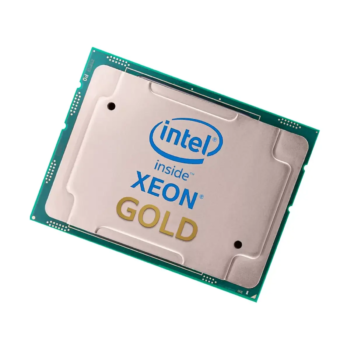
Intel Xeon Scalable Processors (current generations: Sapphire Rapids, Emerald Rapids, Granite Rapids) integrate up to dozens of performance cores, DDR5 memory support, PCIe 5.0/6.0, and instruction sets such as AVX-512 and AMX for AI workloads. Xeon CPUs emphasize predictable latency, extensive ECC validation, and long platform life — a common choice for corporate servers and virtualized infrastructure.
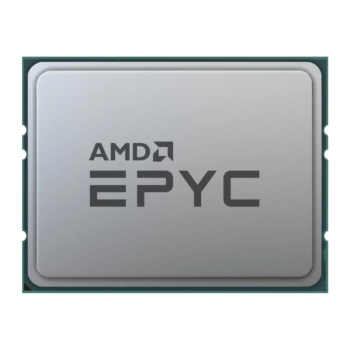
AMD EPYC Processors (Genoa, Bergamo, Turin) lead in scalability. Built on 5 nm process nodes, they deliver exceptional core density, wide memory bandwidth across twelve DDR5 channels, and next-generation CXL 3.0 connectivity. EPYC chips dominate HPC and cloud computing environments thanks to high performance per watt and flexible I/O options.
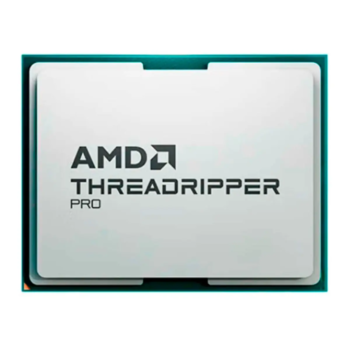
AMD Ryzen Threadripper PRO bridges the gap between workstation and data-center performance. It supports up to 96 cores, 128 PCIe 5.0 lanes, and ECC DDR5 memory, making it a reliable solution for simulation, design automation, and rendering farms.
The latest Xeon and EPYC generations support DDR5-5600 MT/s memory and PCIe 5.0/6.0 interfaces, offering significant bandwidth improvements for NVMe and GPU-attached systems.
Selecting a CPU should balance socket compatibility, memory configuration, and power budget to achieve stable performance under sustained load.
Server CPUs operate within complex environments: redundant power systems, ECC memory, and advanced firmware security (Intel SGX, AMD SEV-SNP). Multi-socket scalability allows horizontal growth across 2-, 4-, and 8-CPU systems. Firmware and BIOS updates maintain compatibility with modern hypervisors and containerized platforms like VMware vSphere, KVM, and Proxmox VE.
Next-generation designs, such as Intel Granite Rapids and AMD Turin EPYC, adopt finer process nodes and new interconnect standards, enabling higher performance at reduced power consumption. Support for CXL 3.0, expanded DDR5 speeds, and hybrid CPU architectures will continue to define efficiency and scalability in modern data centers.
What’s the difference between Intel Xeon and AMD EPYC CPUs?
Xeon processors focus on predictable latency, tight ecosystem integration, and broad enterprise support. EPYC chips offer more cores per socket, higher memory capacity, and better energy efficiency — ideal for HPC and cloud workloads.
Are Threadripper PRO CPUs suitable for servers?
Yes. Threadripper PRO bridges workstation and enterprise computing, providing ECC support and high PCIe bandwidth for compute-intensive professional environments.
How many cores are optimal for virtualization?
Mid-range virtualization servers perform best with 24–64 cores per CPU; heavy multi-tenant or AI-inference clusters may require 96 cores or more.
Why does DDR5 matter for servers?
DDR5 increases memory bandwidth and capacity per channel, reducing bottlenecks in multi-threaded and data-driven workloads.
What’s the difference between Intel Xeon Bronze, Silver, Gold, and Platinum processors?
Intel tiers its Xeon Scalable lineup by capability:
Bronze — entry-level, low-frequency models for light server tasks.
Silver — balanced efficiency for small virtualization and file servers.
Gold — higher frequencies, more cores, and faster memory — suited for large VMs, analytics, and enterprise workloads.
Platinum — top-end chips supporting up to 8-socket configurations, maximum PCIe lanes, and advanced reliability features for mission-critical systems.
Each generation (Ice Lake, Sapphire Rapids, Emerald/Granite Rapids) retains this hierarchy while improving memory support and AI acceleration.
Do newer CPUs work with older platforms?
Compatibility depends on socket and chipset. Most modern Intel Xeon and AMD EPYC families require updated motherboards and BIOS revisions to support DDR5 and PCIe 5.0 standards.