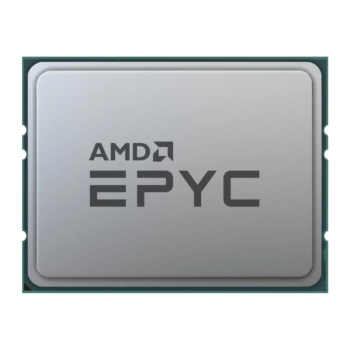
AMD EPYC 7302
10€ (excl. TAX)
New
Showing 29 products.
10€ (excl. TAX)
10€ (excl. TAX)
10€ (excl. TAX)
10€ (excl. TAX)

10€ (excl. TAX)

10€ (excl. TAX)

10€ (excl. TAX)

10€ (excl. TAX)

10€ (excl. TAX)

10€ (excl. TAX)

10€ (excl. TAX)

10€ (excl. TAX)

AMD’s EPYC platform is built for sustained, multithreaded workloads where throughput, memory bandwidth, and power efficiency matter more than peak desktop clocks. It underpins modern virtualization clusters, high-density cloud nodes, analytics engines, edge deployments, and HPC/AI back ends. The family is organized by sockets and generations, so choosing the right series starts with understanding memory topology and I/O on each platform.
Three sockets define the landscape. SP3 serves Rome (7002) and Milan/Milan-X (7003), offering eight DDR4 channels and broad ecosystem maturity—ideal for refreshing existing racks or extending proven architectures. SP6 powers EPYC 8004 “Siena” with six DDR5 channels and a leaner I/O footprint, tuned for compact, energy-efficient edge and telco servers. SP5 hosts EPYC 9004/9005 with twelve DDR5 channels, massive PCIe Gen5 lane counts, and support for advanced interconnects such as CXL—this is the domain for dense compute and memory-bound analytics.
The 4004 and 4005 series bring core server capabilities to small businesses and hosted IT. They pair modest core counts with DDR5 and PCIe Gen5 in single-socket designs, keeping thermals and costs under control. Typical use cases are lightweight virtualization, web and application servers, and office infrastructure where ECC, platform stability, and modern I/O matter but extreme core density is unnecessary.
Rome (7002) introduced up to 64 cores per socket and set the template for balanced throughput across eight memory channels. Milan and Milan-X (7003) refined that balance and added SKUs with 3D V-Cache for cache-sensitive analytics, EDA, and CFD. For organizations standardized on SP3 motherboards, these families remain a dependable choice with predictable performance, robust firmware support, and attractive pricing for single-socket “P” systems.
Siena (8004) targets scenarios where rack depth, power, and thermals are constrained. Six DDR5 channels and generous PCIe Gen5 connectivity support fast NICs, NVMe fabrics, and accelerators without the footprint of SP5. NEBS-friendly “N/PN” variants address telecom and industrial environments that require extended temperature and vibration tolerances. Typical deployments include CDN points of presence, industrial gateways, and compact virtualization hosts.
The 9004 generation (Genoa/Bergamo/Genoa-X) delivered twelve DDR5 channels, large L3 caches, and very high core counts, opening the door to memory-bound analytics and heavily threaded cloud instances. EPYC 9005 “Turin” raises the ceiling again with Zen 5/Zen 5c configurations, higher IPC, and improved performance per watt. SP5’s lane budget and memory bandwidth make it the natural base for multi-GPU nodes, NVMe-rich storage servers, and large virtualization clusters running mixed workloads.
Choosing among them often comes down to licensing model (per-socket vs per-core), latency profile of the application, and whether your workload is memory- or cache-limited.
Plan memory population per socket to avoid bandwidth asymmetry; under-filled channels can erase theoretical gains. Size PSUs and cooling for sustained load rather than peak TDP—especially in dense SP5 builds with multiple high-speed NICs and NVMe drives. Verify firmware and microcode alignment for your hypervisor (VMware, KVM, Proxmox) and enable NUMA-aware scheduling in guest workloads. For mixed fleets, standardize on a small set of SKUs to simplify patching and spare management.
How do I choose between SP3, SP6, and SP5?
Start with memory channels and I/O. SP3 is DDR4-based and proven for Rome/Milan refreshes. SP6 fits compact, efficient nodes with DDR5. SP5 offers maximum bandwidth and lane count for large VMs, analytics, and accelerator-heavy hosts.
When is a “P” model preferable?
In single-socket servers. You keep consolidation high while cutting board cost and, in many stacks, lowering per-socket license fees.
What problem do “X” (3D V-Cache) parts solve?
They speed up cache-bound applications—think EDA, certain databases, and simulations that reuse large working sets—by reducing trips to main memory.
Why pick an “F” SKU over a higher-core model?
Latency-sensitive microservices, trading platforms, and certain database front ends benefit more from higher clocks than from extra threads.
Where does 8004 make the most sense?
Edge and telco. It balances DDR5 bandwidth, Gen5 I/O, and tight power/thermal envelopes for shallow racks and remote sites.
What advantages do 9005 processors bring over 9004?
Higher IPC with Zen 5/5c, improved efficiency, and continued leadership in memory bandwidth and lane budget on SP5—useful for AI back ends and NVMe-rich systems.