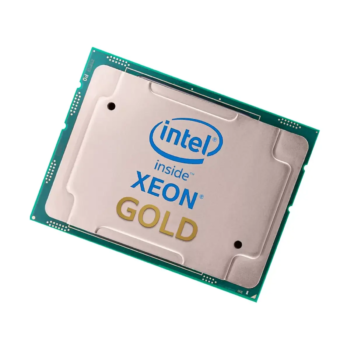
Intel Xeon Gold 6230
10€ (excl. TAX)
New
Showing 61 products.
10€ (excl. TAX)
10€ (excl. TAX)

10€ (excl. TAX)

10€ (excl. TAX)

10€ (excl. TAX)

10€ (excl. TAX)

10€ (excl. TAX)

10€ (excl. TAX)

10€ (excl. TAX)
10€ (excl. TAX)

10€ (excl. TAX)

10€ (excl. TAX)

Intel Xeon processors have long been the foundation of enterprise-grade computing, powering everything from small business servers to large-scale cloud and AI infrastructures. Designed for 24/7 workloads, these CPUs combine consistent performance, wide platform compatibility, and advanced reliability features such as ECC memory support and hardware-level security. The Xeon family is divided into several product lines — E, Silver, Gold, Platinum, W, and Max — each tailored to specific performance tiers, socket types, and deployment scenarios.
The latest Xeon generations are based on the Sapphire Rapids and Emerald Rapids architectures, built for the LGA4677 platform with DDR5 and PCIe 5.0 support. These processors introduce CXL 1.1, AMX acceleration for AI workloads, and up to 64 cores per socket. Intel’s upcoming Granite Rapids and Sierra Forest architectures will further split the lineup into performance (P-core) and efficiency (E-core) designs, offering improved scalability across cloud and on-premise environments.
The series targets small businesses and light server tasks that require dependable performance without data center overhead. Offering between 4 and 8 cores, these processors support DDR5 ECC memory, integrated graphics (on select SKUs), and low TDP ratings from 65 to 125 W. They are ideal for entry-level file servers, NAS systems, and office virtualization nodes built on mainstream platforms such as LGA1700. Despite their compact form factor, they maintain Xeon-class validation, uptime, and firmware stability.
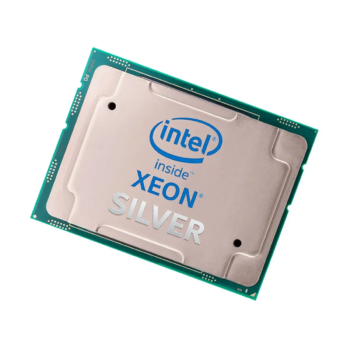
Processors represent the entry point to multi-socket systems. Balancing core count and power efficiency, they feature up to 24 cores, eight memory channels (DDR4 or DDR5, depending on generation), and PCIe 4.0/5.0 lanes. Typical deployments include virtual machines, mail and web servers, and light database workloads. Silver models maintain enterprise reliability while consuming less power, making them a solid fit for organizations expanding their first rack infrastructure.
The series defines the middle ground between scalability and cost. With up to 44 cores, support for 2–4 sockets, and advanced technologies like AVX-512, Speed Select, and Turbo Boost Max 3.0, these CPUs handle heavier virtualization, AI inference, and transaction processing. They are commonly used in data centers that require predictable throughput for hundreds of virtual machines or high-performance analytics clusters. The Gold line also provides a longer product lifecycle, ensuring continuity for long-term enterprise projects.
At the top of the range sits Xeon Platinum, designed for large-scale virtualization, cloud orchestration, and HPC workloads. These processors offer up to 60 cores, 8-channel DDR5 memory, and support configurations with 4 to 8 sockets. The integration of CXL interconnect allows memory pooling and accelerator sharing across nodes, while AMX and AVX-512 extensions boost AI training and matrix computation performance. Platinum CPUs are the backbone of mission-critical environments where scalability, fault tolerance, and energy balance define total cost of ownership.
The series brings server reliability to professional desktop environments. Available with 8–56 cores, they support ECC DDR5 memory, PCIe 5.0, and ISV certification for creative, design, and engineering applications. Xeon W processors are favored in CAD, 3D rendering, and content production where consistent compute and verified stability are more valuable than raw gaming performance. Their single-socket design simplifies thermal management and allows use in tower or compact workstation chassis.
The Xeon Max family represents Intel’s push into memory-bound high-performance computing. Each processor integrates up to 128 GB of on-package HBM2e memory, delivering massive bandwidth for simulation, modeling, and AI training. This eliminates bottlenecks between CPU and DRAM in workloads such as climate modeling, computational chemistry, and physics simulations. Xeon Max processors combine large memory capacity, AVX-512, and AMX acceleration, bridging the gap between traditional CPUs and GPUs in hybrid supercomputing environments.
Selecting the proper Xeon processor depends on how the system will be used:
Other parameters worth considering include socket type (LGA1700, LGA4189, LGA4677), memory channels (4 to 8), and PCIe generation support (4.0 or 5.0). Pay attention to thermal design and PSU requirements, as high-core Platinum and Max SKUs can exceed 350 W TDP under load.
What is the main difference between Xeon Silver, Gold, and Platinum?
Silver is designed for efficiency and entry-level servers, Gold balances performance and cost with multi-socket scalability, and Platinum is optimized for top-tier HPC and virtualization.
Is Xeon better than Core i9 for professional use?
Yes, for sustained workloads. Xeon CPUs feature ECC support, larger cache, and validated stability for 24/7 uptime — critical in professional or enterprise environments.
What makes Xeon W different from consumer processors?
Xeon W chips support ECC memory, official ISV certification, and more PCIe lanes for professional GPUs and storage, ensuring predictable performance in workstation applications.
What is Xeon Max used for?
Xeon Max targets compute-heavy and memory-bound workloads. The integrated HBM2e memory offers higher bandwidth than DDR5, accelerating AI, CFD, and scientific simulations.
Which Xeon generations support DDR5 and PCIe 5.0?
4th Gen Sapphire Rapids, 5th Gen Emerald Rapids, and newer Granite Rapids series support both DDR5 and PCIe 5.0 interfaces for modern data center hardware.
Does Xeon support CXL?
Yes. From Sapphire Rapids onward, Xeon processors integrate CXL 1.1 for advanced memory and accelerator sharing across connected systems.